
A professional roof inspection is a structured evaluation of the roof covering, drainage system, flashing, ventilation, attic, and related parts of the building. The purpose is not simply to look for missing shingles. A thorough inspection helps identify active leaks, early deterioration, storm damage, installation concerns, and conditions that may shorten the roof’s service life.
For households in Owego, inspections can be especially useful after heavy snow, wind, ice, repeated freeze-thaw cycles, or periods of driving rain. These conditions may affect roofing materials gradually, sometimes before interior damage becomes visible.
What happens before the inspection begins?
The inspection usually starts with a brief discussion about the property and any concerns noticed by the occupants. Useful information may include:
- When the roof was installed or last repaired
- Whether leaks have appeared and where they were seen
- Any recent wind, hail, ice, or snow-related events
- Rooms with stains, peeling paint, musty odors, or damp insulation
- Previous repairs, additions, skylights, chimneys, or satellite equipment
- Whether the inspection is connected to a home purchase, insurance claim, maintenance question, or suspected leak
The inspector may also ask whether attic access is available. Moving stored items away from the attic hatch can make the interior portion of the inspection more complete.
Weather affects the process. A roof may not be safely walkable during rain, ice, high winds, or active snowfall. In those conditions, the inspection may rely more heavily on ground-level observations, attic evidence, and photos taken from safe areas.
Does the inspector walk on the roof?
Sometimes, but not always. Roof access depends on slope, surface condition, height, weather, material, and the presence of fragile areas.
A walkable asphalt-shingle roof may be examined directly. Steep roofs, brittle older shingles, wet surfaces, slate, certain metal systems, and roofs with unsafe access may instead be viewed from ladders, roof edges, nearby elevated areas, or the ground. A careful inspection should not involve unnecessary risk or damage.
The inspection is not less useful simply because every surface cannot be walked. Experienced evaluators combine several methods, including visual observations, attic findings, moisture clues, drainage review, and documentation of areas that could not be safely reached.
What does the exterior inspection cover?
The exterior review examines the roof as a system rather than focusing on one isolated defect. Common inspection points include:
Roof coverings
The inspector looks for missing, cracked, curled, blistered, slipped, or loose shingles and other signs of aging. Granule loss, exposed fasteners, surface wear, and inconsistent repair areas may also be documented.
A few damaged shingles do not automatically mean the entire roof has failed. The significance depends on the roof’s age, the extent of the damage, the condition of the underlayment, and whether water has reached the roof deck or interior.
Flashing and penetrations
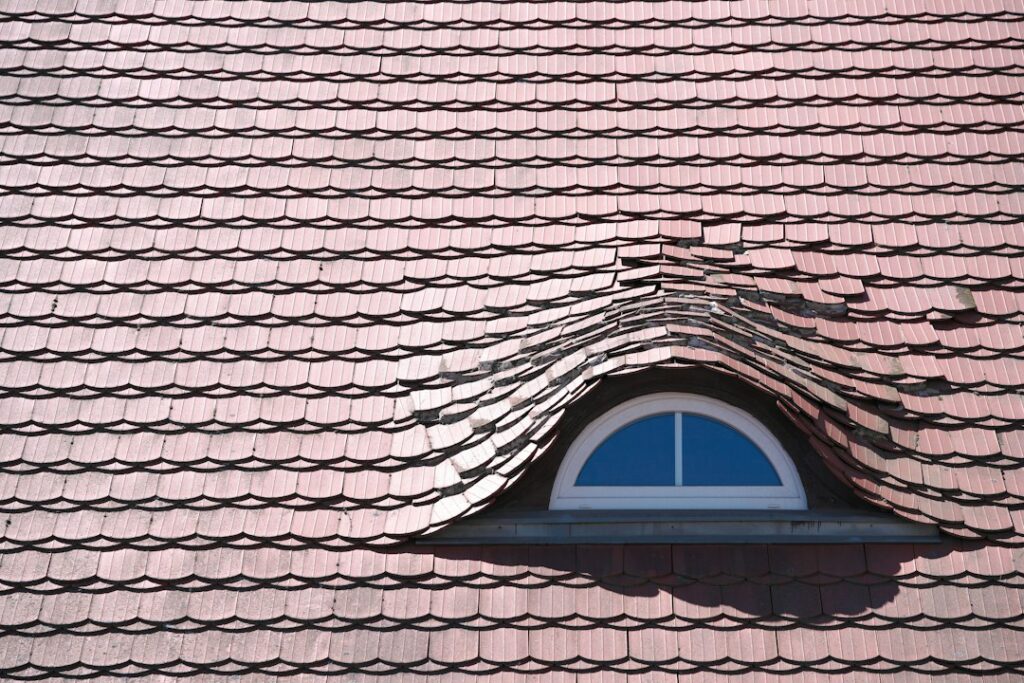
Flashing protects vulnerable transitions, including areas around chimneys, plumbing vents, skylights, dormers, walls, valleys, and roof edges. Failed sealant, corrosion, lifted flashing, open joints, or improper overlaps can allow water to enter even when the surrounding shingles appear intact.
These transition areas deserve close attention in older homes and in buildings with multiple roof angles or additions.
Gutters, downspouts, and drainage
Water must leave the roof efficiently. The inspection may check for clogged gutters, sagging sections, loose fasteners, damaged downspouts, poor discharge locations, and areas where water backs up against the roof edge.
Heavy leaves, ice, and seasonal debris can interfere with drainage. Water spilling over a gutter may stain siding, saturate trim, or contribute to foundation moisture, even when the roof covering itself is in reasonable condition.
Roof shape and surface drainage
Low areas, sagging sections, ponding water, blocked valleys, and inadequate slope can create recurring moisture problems. A roof does not have to be visibly leaking to have a drainage concern. Persistent moisture can gradually affect shingles, underlayment, sheathing, insulation, and framing.
Why is the attic inspection important?
The attic can reveal problems that are not obvious from the roof surface. Interior inspection commonly includes the underside of the roof deck, insulation, ventilation, framing, and areas around penetrations.
The inspector may look for:
- Dark stains or water marks on roof sheathing
- Damp insulation or compressed insulation
- Mold-like growth caused by excess moisture
- Daylight visible through roof openings
- Rusted nails or metal components
- Condensation on the underside of the roof deck
- Inadequate or blocked ventilation
- Signs that bathroom or kitchen exhaust is entering the attic
- Sagging, damaged, or weakened structural members

A roof leak and attic condensation can produce similar stains. Water entering around flashing may leave a localized trail, while condensation often affects broader areas, especially during cold weather. Correctly distinguishing between these conditions matters because replacing shingles alone will not solve a ventilation or indoor-moisture problem.
Will the inspection include the inside of the home?
Often, yes. Interior areas below roof penetrations and roof valleys may be checked for ceiling stains, peeling paint, swollen drywall, damp trim, or musty odors.
A visible ceiling mark does not always appear directly below the entry point. Water can travel along roof decking, rafters, insulation, or framing before reaching the ceiling. For that reason, the location of an interior stain may not identify the exact source.
Some leaks occur only during specific wind directions or heavy rain. Others appear during snowmelt or after ice forms along the eaves. An inspection may identify evidence of past moisture without being able to reproduce the exact weather conditions that caused it.
What should the inspection report contain?
A useful report should explain observations in plain language and separate urgent concerns from routine maintenance. It may include photographs, descriptions of affected areas, approximate locations, and notes about conditions that could not be fully evaluated.
Findings are often grouped into categories such as:
- Immediate concern: Active leaking, exposed decking, unsafe structural conditions, or openings that allow significant water entry
- Repair recommended: Defective flashing, localized shingle damage, drainage problems, or deteriorated seals
- Maintenance item: Debris, minor surface wear, loose accessories, or vegetation near roof components
- Monitor: Aging or developing conditions that do not yet require immediate repair
- Not visible or inaccessible: Areas blocked by snow, unsafe slope, stored items, or limited attic access
The report should avoid treating normal aging as an emergency. It should also explain when a finding requires additional evaluation, such as structural review, moisture testing, electrical review, or code-related guidance.
What does a roof inspection not determine?
A roof inspection is not automatically a full structural analysis, mold assessment, energy audit, insurance decision, or code-compliance certification. It may identify signs that another type of evaluation is appropriate, but those services involve different methods and qualifications.
An inspection also cannot guarantee that a roof will remain leak-free. Roofing systems are exposed to changing weather, falling branches, ice, foot traffic, and maintenance conditions. The inspection provides a point-in-time assessment based on what was visible and accessible.
New York State requirements may apply when roofing work involves replacement, alteration, roof-mounted equipment, structural changes, or related building work. An inspection report can identify conditions that may affect such work, but permit and code questions should be confirmed with the appropriate local authority before construction begins.
When is an inspection especially useful?
A roof inspection is particularly helpful after a major storm, before buying or selling a home, after a ceiling stain appears, before adding rooftop equipment, or when the roof is approaching the later part of its expected service life.
Seasonal inspections can also identify problems before winter. Loose flashing, blocked drainage, exposed fasteners, and damaged shingles may become more serious when repeated freezing and thawing, snow loads, and ice affect the roof assembly.
For area households, the most useful result is not simply a label such as “good” or “bad.” It is a clear explanation of what was observed, what may be causing it, how urgent it appears, and which questions should be answered before repair or replacement decisions are made.
